
The Complete Guide to Latex Care: How to Properly Clean, Maintain, and Extend the Lifespan of Latex Products
Table of Contents
Latex is a natural material, and if properly cared for, latex clothing can last a long time. However, caring for latex can be a tricky issue for many people. If you read this article carefully, you will gain a general understanding of how to properly maintain latex garments.
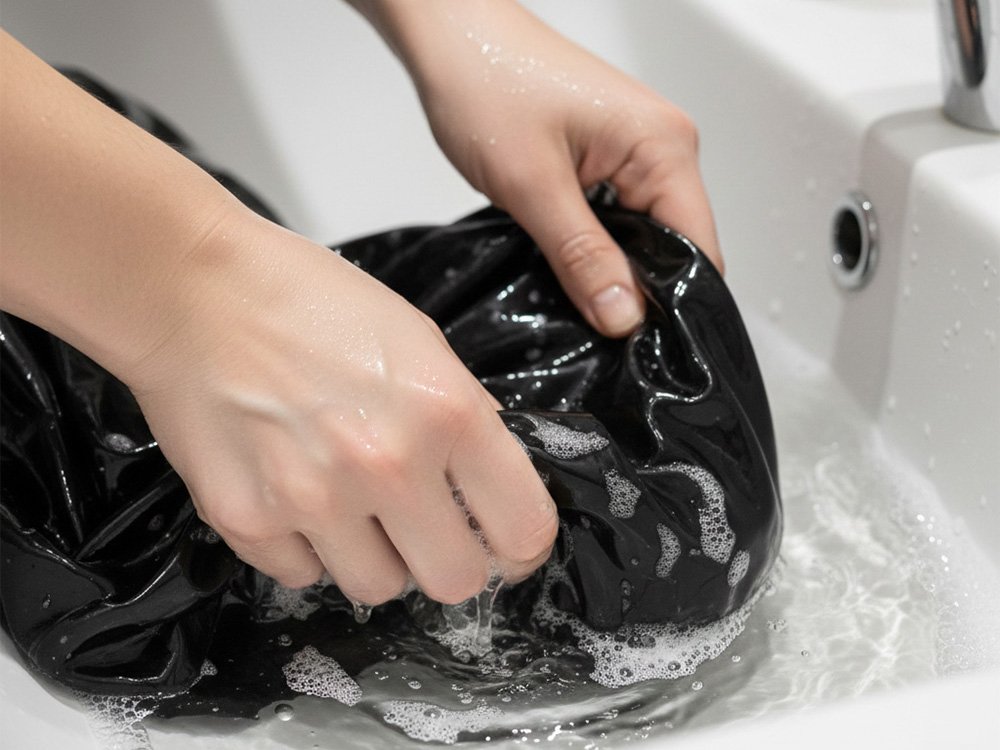
Step-by-Step Guide to Cleaning Latex Clothing
Clean After Wearing
We recommend cleaning your latex garments after each use. This helps extend their lifespan, as the oils secreted by your skin during wear can gradually break down the latex’s chemical composition. Rinse your latex items with warm water to remove body oils, sweat, powders, or any latex garment lubricants.
Gently Wash by Hand
- Pour warm water into a sink or container, add a latex cleaner or a mild detergent, and stir the water to create some foam.
- Submerge the garment in the water and gently move it around, paying special attention to areas where sweat tends to accumulate, such as the underarms. Note: Do not use a washing machine to clean latex.
- Finally, rinse thoroughly to ensure no foam or detergent residue remains on the latex.
Polish Promptly
- Fill the sink with water again, then add the purchased latex polish into the water.
- Submerge the garment in the water and gently swish it until the latex becomes smooth. Then turn it inside out and repeat the same process.
Carefully Dry
- Hang the latex garment on a plastic hanger, avoiding any contact with metal.
- Use a lint-free microfiber towel to gently blot and remove excess water.
- Hang the latex clothing for a day or two, remembering to turn it inside out occasionally, until all moisture has completely evaporated.
How to Properly Store Latex Clothing
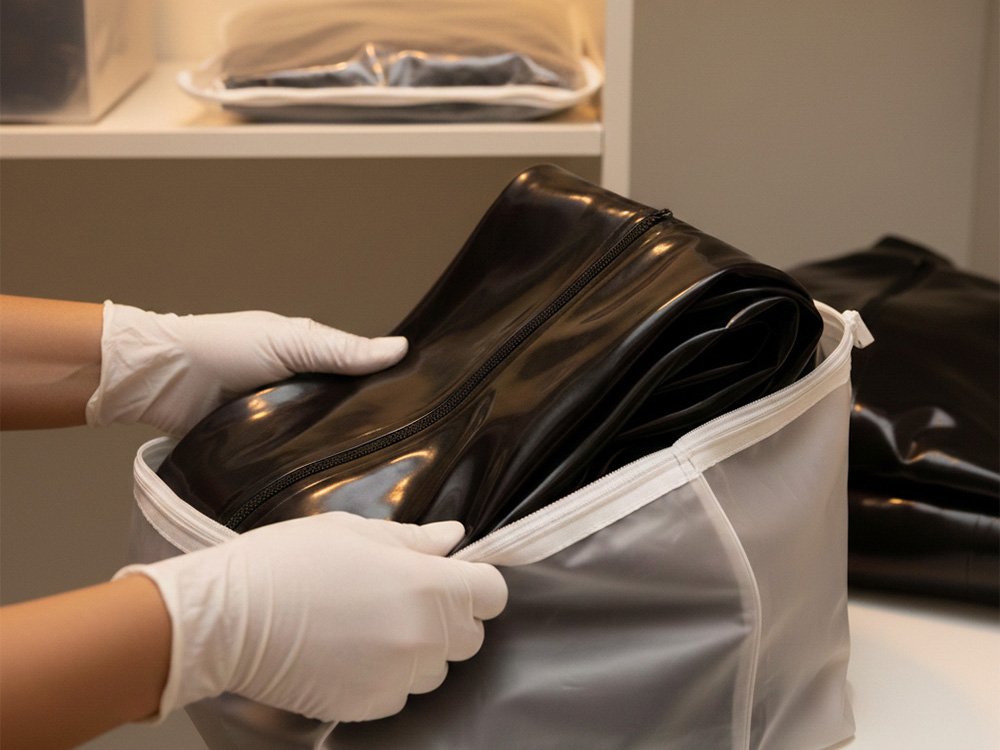
- Make sure the garment is completely dry before storing.
- Store it away from sunlight and strong light; a wardrobe or storage box is recommended.
- Apply a layer of silicone-based lubricant, especially on folded areas, to prevent the latex from sticking.
- Hang thick or large garments on plastic hangers, while smaller or thinner items can be gently folded for storage.
- Avoid direct contact with PVC, leather, denim, or dark-colored fabrics, as dye transfer can cause permanent staining. It’s best to use a dust bag or acid-free paper to separate items.
- Pay attention to storage conditions and avoid high temperatures. A range of 10–25°C is recommended. In humid environments, you can use desiccants, but ensure they do not touch the latex directly.
- If storing latex garments for a long period without wearing, it’s also recommended to check and maintain them periodically to ensure a longer lifespan.
How to Properly Remove Latex Clothing
Removing latex clothing is different from taking off regular garments, and using the wrong method can easily damage the latex. To avoid overstretching—especially when removing a tight-fitting dress—it is recommended to do so in the shower or bathtub. During the shower, you can apply a small amount of body wash to the neckline and the inside of the shoulders, which helps the tight dress slide off more smoothly. When taking it off, avoid pulling forcefully; instead, insert your thumbs inside the garment and gently, evenly push the latex off.
Note: Latex socks become extremely slippery when wet, so be careful in the shower.
Key Maintenance Tips for Long-Term or Frequent Use
Wearing latex garments for long periods or using them frequently puts extra stress on the material, making daily maintenance especially important.
- First, after each use, latex should be cleaned promptly to prevent sweat, body oils, or residual lubricants from sitting on the surface for extended periods, as these substances accelerate aging. When cleaning, be gentle—avoid scrubbing or wringing the latex.
- Second, give your latex time to rest. Even well-maintained latex garments should not be worn for consecutive days. Allowing the latex to “relax” helps restore elasticity and extends its lifespan.
- For maintenance, frequent users should regularly apply care oils or silicone-based lubricants. If the surface starts to feel dry or lose its shine, it’s a sign the latex needs conditioning. However, apply oil sparingly—too much can attract dust.
- Additionally, pay extra attention to high-friction areas during long-term wear, such as the underarms, shoulders, crotch, or around zippers. These spots are most prone to thinning or small cracks. Regular inspections can catch issues early and prevent further damage.
- Finally, frequent use does not mean storage can be neglected. After each wear, make sure the latex is completely dry and oiled before storing it, keeping it away from light, ensuring ventilation, and avoiding heat sources. Good habits and careful maintenance are key to keeping latex garments in excellent condition for the long term.
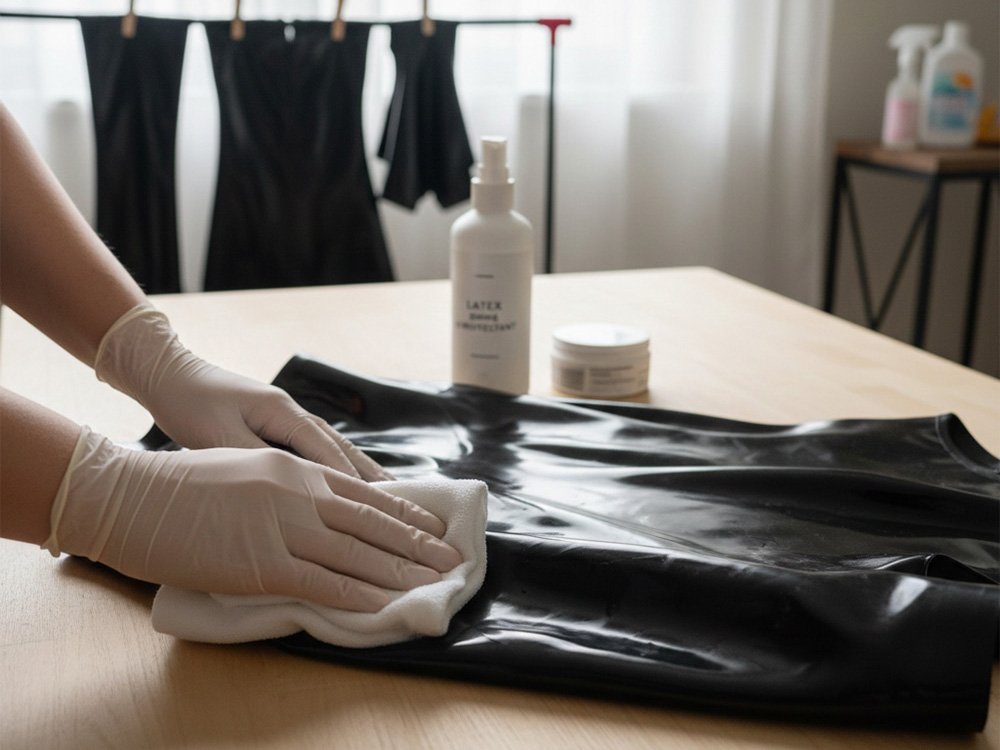
Common Latex Care Mistakes and Missteps
Many issues in latex care are not due to the material being fragile, but rather to incorrect usage and maintenance. Here are some common yet easily overlooked mistakes:
- First, using regular laundry detergent or soap to clean latex is a very common mistake. Such cleaners often contain alkaline components or additives that gradually damage the latex structure, causing stickiness, hardening, or even cracking. Latex should ideally be cleaned with a dedicated latex cleaner or a gentle, additive-free product.
- Second, drying latex in direct sunlight or in high-temperature environments is another serious error. Many people hang latex near windows or heaters for convenience, but this accelerates aging, fading, and significantly shortens its lifespan. Latex should always be air-dried in a cool, ventilated, and shaded environment.
- Third, forcefully pulling or quickly putting on/removing latex can cause irreversible damage. This is especially true for tight-fitting styles, where aggressive stretching can thin the material locally or even cause tears. The correct approach is to slowly push or slide the garment, using lubrication or water if needed to reduce friction.
- Another common problem is using the wrong care products. Petroleum jelly, mineral oils, skincare oils, or products containing alcohol can all corrode latex. The damage may not appear immediately, but over time the latex can lose elasticity or even dissolve.
- Improper storage is also frequently overlooked. Direct contact with leather, metal, or dark-colored fabrics, or storing latex before it is completely dry, can lead to staining, sticking, or mold spots.
- Finally, neglecting regular inspections is a mistake. Many damages do not happen suddenly but start as small cracks or localized thinning. Regular checks and timely maintenance can often prevent a latex garment from being prematurely ruined.
Avoiding these common mistakes is even more important than frequent care and is key to keeping latex garments in good condition for the long term.

How to Tell if Latex Has Aged or Needs Replacement
Latex is not a material that can last forever. Even with careful daily maintenance, it will gradually age over time and with repeated use. Understanding the current condition of your latex can help prevent unnecessary damage during wear.
- Touch: The most intuitive way to check is by feel. If the latex starts to feel sticky or dry, and applying oil doesn’t restore its smoothness, it usually indicates that the material itself has changed—an early sign of aging.
- Elasticity: Pay attention to its stretch. Well-maintained latex should quickly return to its original shape after being stretched. If it feels loose, rebounds slowly, or shows localized deformation, the material’s strength has significantly decreased.
- Surface and edges: Inspect carefully for small cracks, white marks after stretching, or noticeable thinning in high-friction areas. These are signs of structural damage, and continued wear carries a risk of tearing.
- Color changes: Yellowing, fading, or uneven color—especially in areas frequently exposed to light or heat—usually indicates irreversible oxidative aging of the latex.
- Tear risk and odor: If the latex becomes unusually easy to tear during normal wear or emits a strange odor different from the typical latex smell, it often means the aging is severe and the garment is no longer suitable for use.
In general, when multiple signs of aging appear simultaneously, even if the garment can still be worn, it is not recommended to continue using it. Replacing it promptly not only prevents accidental damage but also ensures safety and comfort.
Summary
Although latex clothing is unique and fun, it is not permanently durable. Regular cleaning, proper maintenance, and correct storage can extend its lifespan, but over time and with repeated use, latex will gradually age. By paying attention to changes in texture, elasticity, surface, and color, you can determine whether it is still suitable to wear. When noticeable signs of aging or easy tearing appear, it should be replaced promptly to ensure safety and maintain wearing comfort.
FAQ
How can I make my latex clothing shiny?
You can use specially formulated sprays and polishes to enhance the gloss of latex. These sprays and polishes have a specially adjusted viscosity that helps achieve the desired shine.
Can sharp objects damage latex clothing?
Latex is highly susceptible to punctures. Even the smallest hole can lead to tearing when worn. Always inspect your garment before and after use, and make sure to repair any small holes or damages before wearing.
What damage can metal objects cause to latex?
Latex garments should avoid contact with metal objects, especially copper, nickel, and copper alloys. These metals can leave permanent stains on latex that cannot be cleaned off.
Can I use petroleum jelly on latex clothing?
Latex garments should avoid contact with oils and petroleum-based lubricants (such as baby oil or petroleum jelly). These substances can damage latex. It is recommended to use silicone-based lubricants or talcum powder to assist with dressing. Additionally, do not store latex items coated in silicone oil, as long-term use of silicone oil can slowly damage the material.
Can latex items be dried in the sun?
Do not expose latex garments to direct sunlight for extended periods:
- UV rays accelerate latex aging.
- Colors may change (e.g., black turning gray).
- The surface may lose its shine.
- Heat accelerates oxidation, reducing the garment’s lifespan.
- Elasticity and fit may decrease.
If I properly maintain my latex garments, how long can I wear them?
With proper storage and care, latex clothing can last many years. By following simple rules—avoiding direct sunlight, storing in a shaded area, keeping garments dry and oil-free, and cleaning after each wear—you can enjoy your latex clothing for a long time. The lifespan of latex garments depends on your maintenance habits, as well as the frequency of use and the stress applied to the material.