
Latex looks best when the palette is intentional. A thoughtful combination of base color, contrast shade, finish, and accessories makes a garment easier to wear across photoshoots, evening events, and styled everyday looks. This guide uses products in the LatexLook catalog to show how to plan a polished latex clothing color palette without losing comfort or visual balance.
Why a Planned Latex Color Palette Matters
Glossy latex reflects light, so color relationships appear stronger than they do in matte fabric. A planned palette keeps the eye moving toward the intended feature—waist shaping, neckline, panel lines, or a statement accessory. Start with one dominant shade, add one supporting shade, and use a small accent only when it improves the silhouette.
Choose the visual priority first
If the garment has strong seam lines or a dramatic neckline, let those details lead. Keep shoes and jewelry quiet. If the garment is a simple solid color, a contrasting belt, glove, or bag can supply the focal point.
Use the LatexLook Color Chart Before You Order
Screen settings change how high-gloss colors look. Compare the swatches in the LatexLook color chart under neutral daylight, then check the same family under warm indoor light. Black, deep red, and oxblood can read very differently depending on the finish and surrounding colors. Save a screenshot of your chosen combination so you can match future accessories consistently.
Build the Outfit Around One Base Color
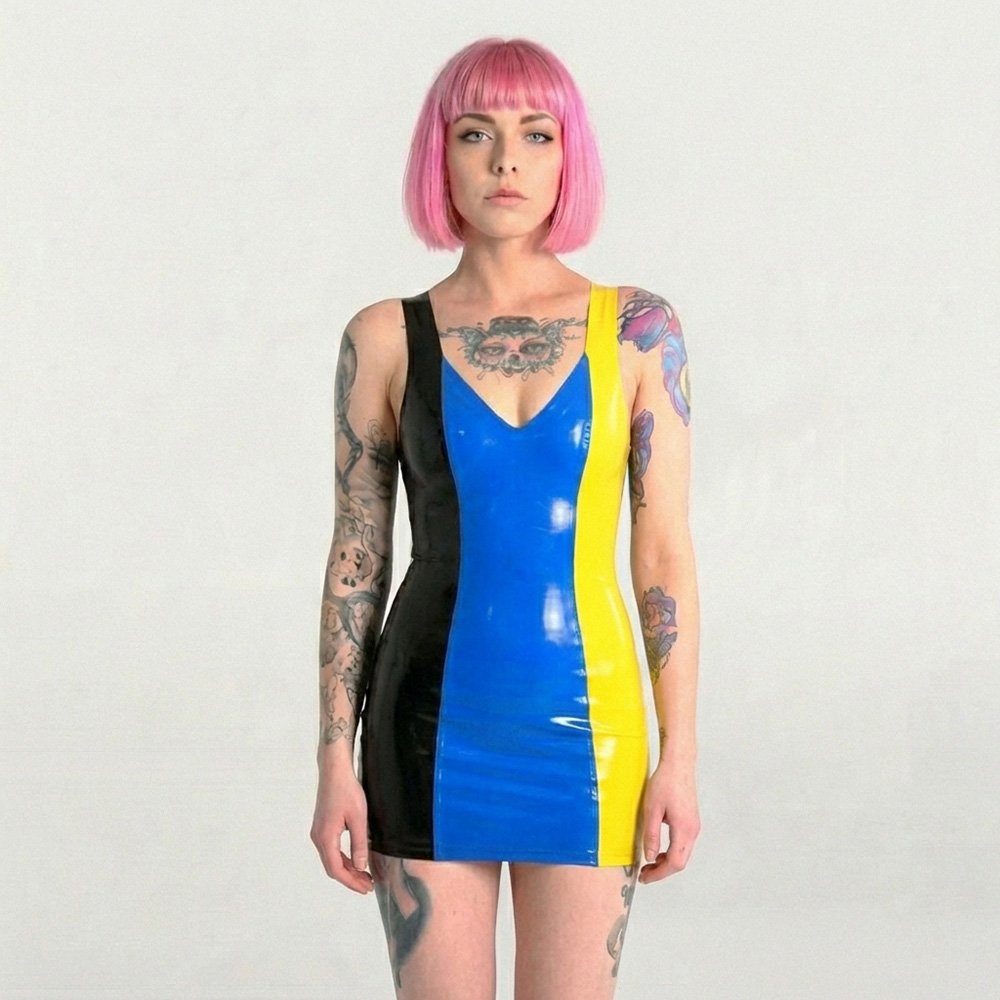
Black is the most flexible base because it frames brighter panels and works with silver, gunmetal, or red accents. The three-color latex bodycon dress already uses panel contrast, so add one neutral shoe and avoid competing prints. For a quieter look, the solid-color sleeveless latex midi dress leaves room for a colored clutch or scarf.
Match finish as well as hue
Glossy black beside glossy red creates a sharp editorial effect. A translucent or softer accent can reduce visual weight. Avoid judging color alone: two shades with similar brightness usually blend more smoothly than two very different brightness levels.
When Two-Tone Design Does the Styling Work
A two-tone garment is useful when you want definition without adding many accessories. The two-tone latex bodycon dress with bow detail uses contrast to frame the waist and neckline. Keep the rest of the look in one of its existing shades, then select a small metal accent that repeats the zipper or hardware tone.
| Outfit goal | Base approach | Accessory direction |
|---|---|---|
| Polished evening | Black plus one deep accent | Silver or gunmetal, one statement piece |
| Editorial contrast | Black plus red or white paneling | Keep shoes neutral; repeat the accent once |
| Soft vintage mood | Muted color with a lighter trim | Pearl-tone or brushed metal details |
| Minimal everyday styling | Single-color midi silhouette | One colored bag, simple footwear |
Coordinate Separates and Accessories
Separates let you control contrast more precisely. The latex skirt set with detachable shoulder straps can be worn with a matching top for a clean column or paired with a black top to make the skirt the focal point. The detachable-strap latex bandeau works as a controlled accent under a jacket or over a high-waisted skirt, provided the layers do not create pressure points.
Use the three-item rule
Choose three visible color notes: the garment base, one contrast, and one metal or neutral detail. Repeat each note no more than twice. This keeps a glossy outfit legible in photographs and prevents small accessories from competing with latex reflections.
Fit and Proportion Still Control the Palette
Color cannot correct an incorrect fit. Measure carefully with the latex size chart and compare bust, waist, hip, and torso measurements before choosing a size. A panel that sits in the wrong place can interrupt the intended color balance, while excess tension can stress seams and dull the finish.
Care Tips for Keeping Colors Clear
Rinse latex after wear, dry it fully away from direct heat, and store dark and light pieces separately when possible. Use a latex-safe dressing aid during dressing rather than pulling hard on a contrasting panel. If a seam or trim is damaged, consult the LatexLook repair service before the issue spreads.
A Repeatable Formula for Shopping and Styling
Before checkout, write down the base color, contrast color, finish, and the occasion. Confirm that at least two existing accessories work with the palette. Then review the product measurements and care requirements. This short process turns a striking image into a practical wardrobe plan and helps you add future pieces without creating unused one-off combinations.
FAQ: Latex Color and Accessory Choices
Which latex color is easiest to style?
Black is the most adaptable base. It accepts bright accents, metallic hardware, and neutral layers while keeping the silhouette visually grounded.
How many colors should a latex outfit use?
Two main colors plus one small accent is a reliable starting point. Add a third strong color only when the garment’s construction already supports it.
Can I mix different latex finishes?
Yes, but keep the finish change deliberate. Pair a high-gloss focal piece with one quieter surface, and test the combination under the lighting where you will wear it.
For fit, care, and ordering questions, the LatexLook FAQ is a useful next reference.